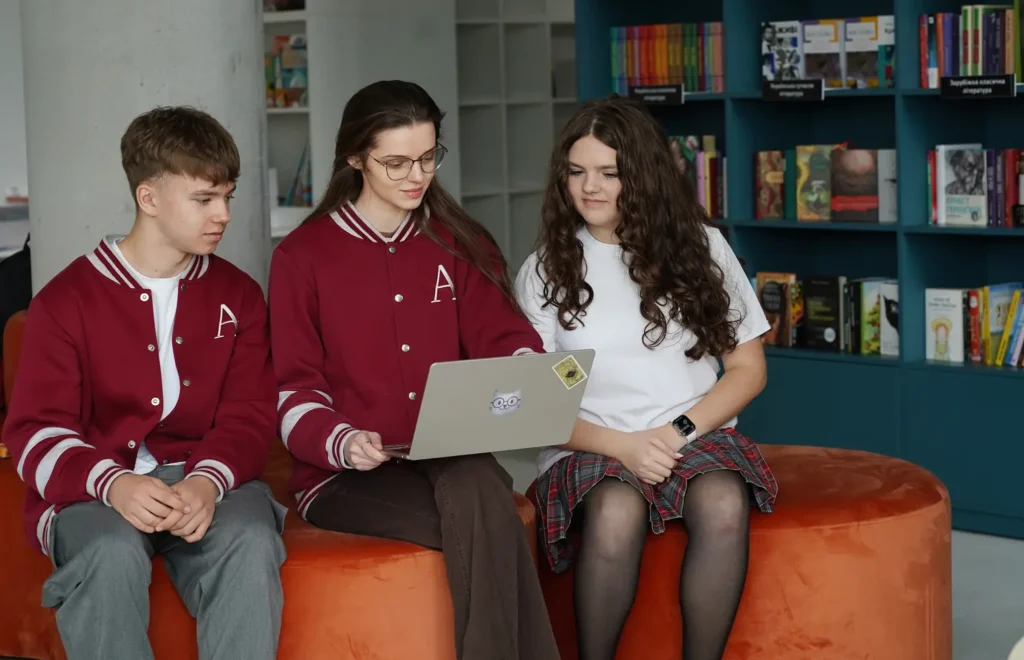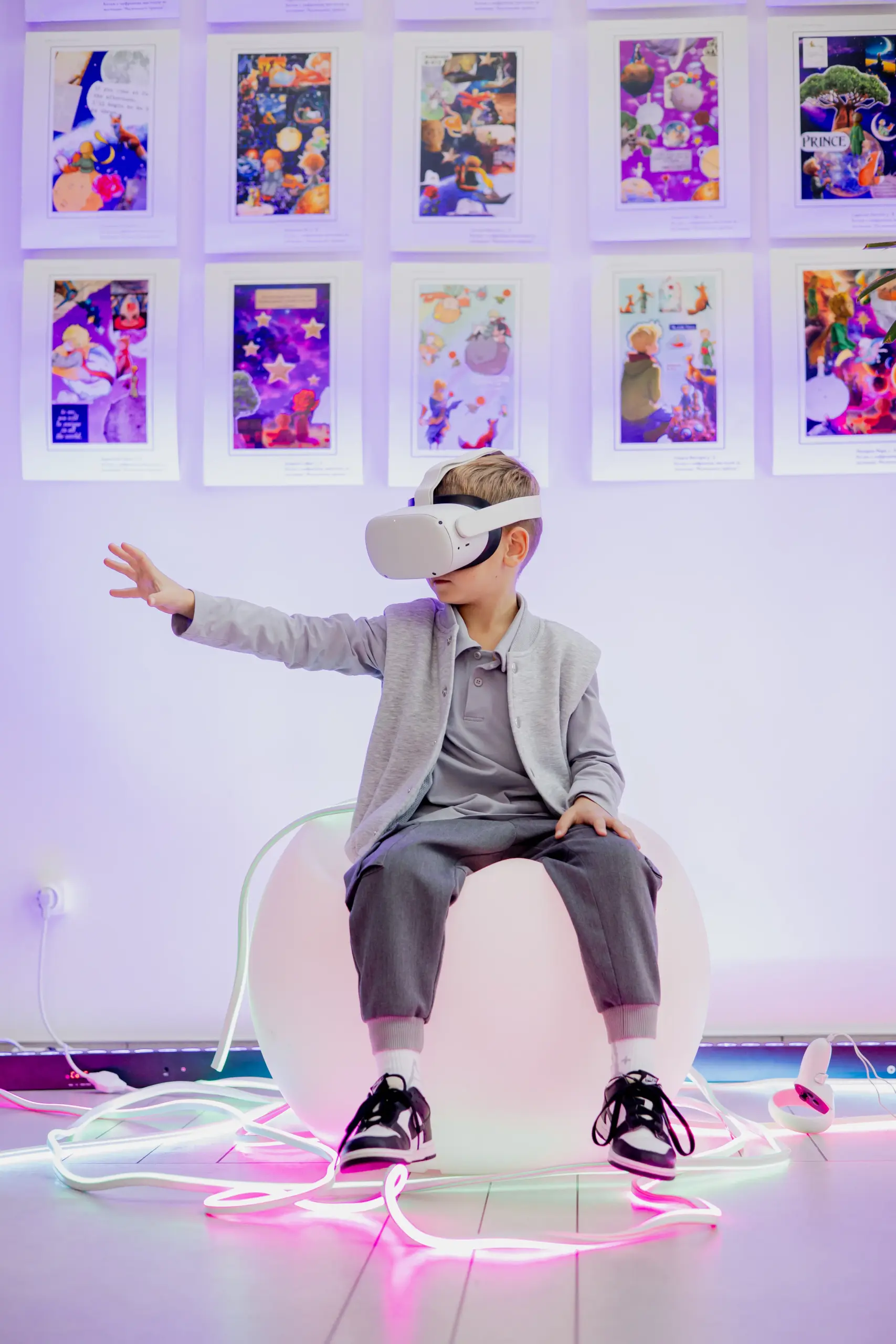
Artificial intelligence finds information in seconds, suggests ideas, generates images, helps structure text and keeps up a dialogue. Digital tools have become a familiar part of learning and have opened up new opportunities for children in research, creativity and collaboration.
Schools now face an important task: to help a child keep their own voice, critical thinking, empathy and sense of responsibility in a world of algorithms. The number of gadgets in a classroom and the list of platforms mastered show the level of technical equipment. The meaning of digital education lies in another question: what kind of person does a child become as they step into the digital world?
“Artificial intelligence can speed up data search or generate an idea in seconds, but it has no empathy or moral compass. The future of education will be defined not by the number of gadgets in a classroom, but by our ability to raise a person who does not delegate to technology the right to be human,” says Bozhena Hryniv, Director of “Respublika Kids” Primary School.
Education Between Knowledge and the Formation of Personality

Education has always served two major functions: transferring knowledge and shaping personality. In the era of digital transformation the value dimension takes on special weight, because a child grows up in a hybrid environment and interacts every day with a vast amount of information, opinions, images and ready-made answers. Their worldview is influenced by family, school, peers, social media, recommendation feeds and generative artificial intelligence. These offer topics for conversation, models of behaviour, judgements and ready-made answers before the child has had time to form their own opinion.
“Education has always balanced between two fundamental tasks: transferring knowledge and shaping personality. In the era of digital transformation, the second function becomes decisive. A modern child grows up in a hybrid environment where algorithms, social media and generative artificial intelligence influence their worldview no less than family or school,” notes Bozhena Hryniv.
Digital competence covers a much broader range of skills than confident use of technology. It includes critical thinking, media literacy, digital safety, ethics, respect for authorship and responsible communication.
“International frameworks, in particular the OECD Learning Compass 2030 and the European DigComp framework, state clearly: digital competence is not simply mastery of tools, but a combination of knowledge, values and a responsible attitude. The development of AI sharpens the questions of authorship, of where support for thinking ends and its replacement begins, and of the role of the human being in general,” the director explains.
The Human at the Centre of Digital Education

Technology should work for a child’s development: helping them explore, create, communicate, ask questions and find solutions. This approach underlies the concept of Magnifica Humanitas, or “the greatness of humanity”.
“The central question of education should not be ‘Which technologies are we introducing?’ but ‘What kind of person does the environment where these technologies are used shape?’ The answer to this challenge is the concept of Magnifica Humanitas, or ‘the greatness of humanity’ — a human-centred paradigm in which technological development is subordinate to the development of the individual,” says Bozhena Hryniv.
Magnifica Humanitas invites us to look at the digital environment through five important dimensions: human dignity, ethical agency, critical awareness, empathetic interaction and responsible creativity.
Human dignity implies privacy, safety, respect for personal boundaries and the right to make mistakes. The student remains an individual with their own pace, needs and experience.
Ethical agency means responsibility for one’s own decisions. AI can help find ideas or structure material, but the person is responsible for the content, accuracy, conclusions and consequences of the work.
“By using AI as an assistant, the student consciously takes responsibility for the final result, its ethics and the consequences of the work done,” emphasises Bozhena Hryniv.
Critical awareness develops the habit of verifying information, questioning sources, and noticing manipulation and algorithmic bias.
Empathetic interaction helps us see a real person behind an avatar and a message. This is where a culture of dialogue, respect and resistance to cyberbullying is born.
“The ethics of dialogue, empathy and countering cyberbullying are the foundation for preserving the ability to see a living person behind the screen of a gadget,” notes Bozhena Hryniv.
Responsible creativity adds important questions to the process of creation: who is this idea for, what problem does it solve, will it be safe and useful.
“Creativity must be directed at creating public good,” says the director of “Respublika Kids” Primary School.
Values as the Everyday Culture of a School

Values shape the everyday culture of a school. A child learns them through interaction with adults, classroom rules, feedback, teamwork and the way the school reacts to mistakes.
“If a school calls for critical thinking but punishes doubt about algorithmic assessments or a teacher’s words, conformism is formed, not independent thinking. If a school speaks about responsibility but evaluates only the final result, overlooking the process, mistakes, attempts and progress, the child learns to avoid mistakes rather than to learn through them,” says Bozhena Hryniv.
What matters are the teacher’s questions, the way mistakes are handled, the rules of the class chat, the culture of discussion, assessment criteria, and the attitude to privacy and authorship.
“Values must show not only in what we tell children, but also in how everyday interaction is organised: how a teacher asks questions, how they respond to a mistake, how a child receives feedback, how team decisions are made, how digital tools are used, and how the school treats privacy and personal boundaries,” emphasises the director.
STEAM: From Technology to a Solution for People

STEAM education gives students the chance to research, model, experiment, create and present their own solutions. In this process curiosity, collaboration, independence and a responsible attitude to results develop.
“At ‘Respublika Kids’ Primary School we see technology not as an end in itself but as an environment for a child’s development. The STEAM approach is not only experiments, programming, modelling or working with digital tools, but an opportunity to give a child a real problem, let them investigate it, put forward their own hypothesis, make mistakes, test assumptions, hear another opinion and create a solution that makes sense for people,” notes Bozhena Hryniv.
The quality of a technology project is determined by its functionality, technical complexity, safety, accessibility, ethics and benefit to people.
“During project work we must assess not only ‘what was created’ but also ‘how and why it was created’. Does the solution take other people’s needs into account? Is it safe and accessible? Can it be useful to society? Is the child able to explain their own solution, and not merely reproduce a result generated by a digital tool?” — stresses the director.
Interacting with Artificial Intelligence
Artificial intelligence can become a useful learning assistant. For meaningful interaction with it, a child needs inner navigation: an understanding of their own role, a habit of checking results and a readiness to answer for the final decision.
“It is important to teach a child to ask technology the right questions: what exactly am I delegating to the algorithm, what do I keep for myself, how will I verify the result I receive, and what am I personally responsible for? Herein lies the fundamental difference between digital literacy and Magnifica Humanitas: digital literacy determines how to use technology effectively, whereas Magnifica Humanitas determines when, why, within what limits and with what responsibility it should be used, while preserving autonomy of thought, ethical choice and respect for human dignity,” explains Bozhena Hryniv.
Magnifica Humanitas moves from a concept to a principle for organising school life through everyday choices. In them, a child gains experience of freedom, responsibility, critical thinking, mutual respect and creativity.
“‘Respublika Kids’ Primary School is a space where a child learns to interact with technology without losing the ability to think, feel, choose, empathise and answer for their own decisions,” concludes Bozhena Hryniv.